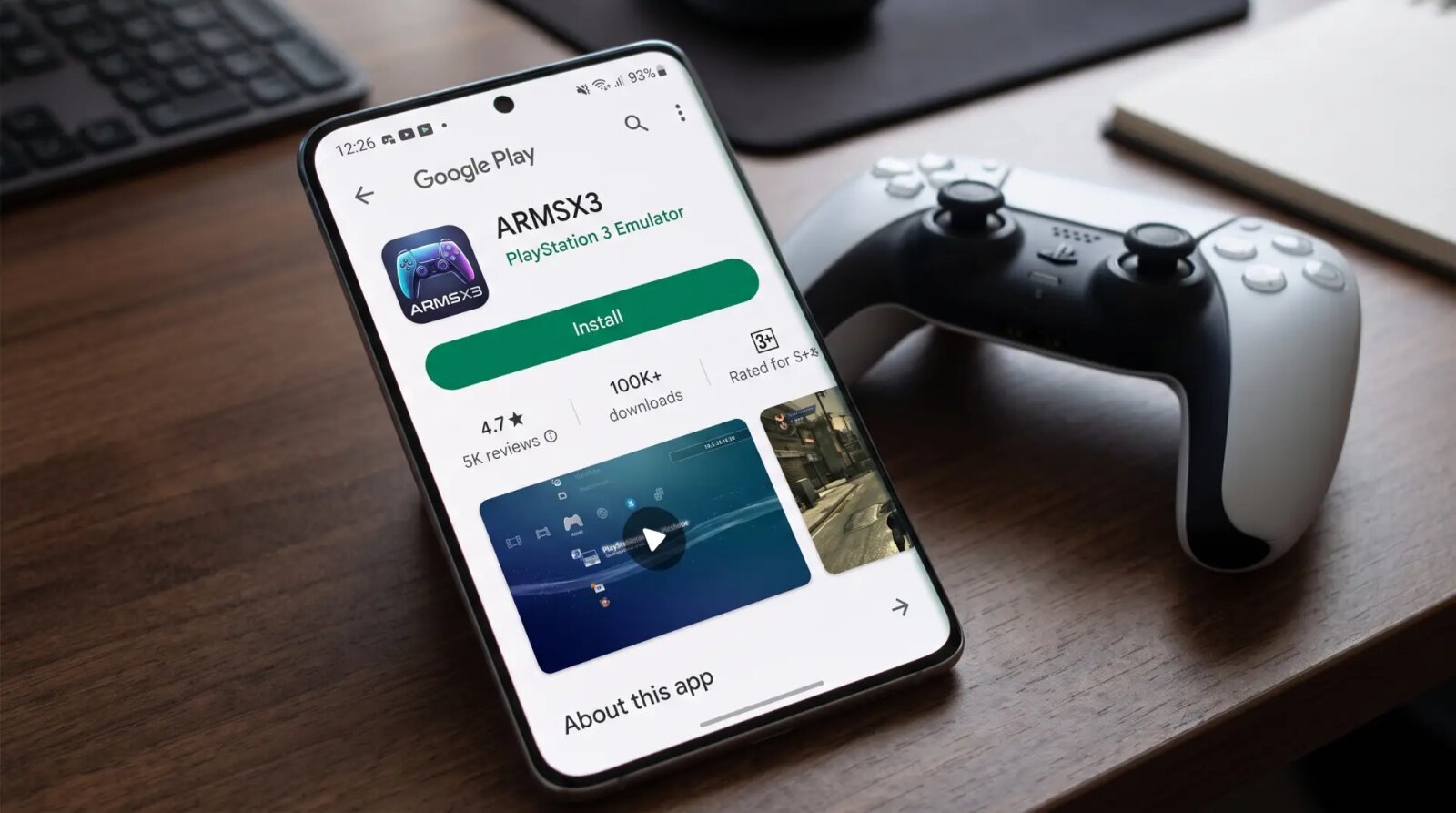
The 122MB application removes sideloading friction for mobile gamers, though achieving playable performance across console titles still requires top-tier Snapdragon silicon and separate system firmware.
PlayStation 3 emulation on Android reached a major milestone this week as open source emulator ARMSX3 officially launched on the Google Play Store, expanding mainstream access.
The storefront release allows mobile users to install the emulator directly through standard Android channels without downloading APK packages from GitHub or granting manual installation permissions. While official distribution simplifies initial setup, running console games on mobile hardware still demands exceptionally capable silicon, official system firmware, and careful configuration.
ARMSX3 initially debuted on GitHub in August 2026, quickly establishing a reputation as the leading software option for running PlayStation 3 software on mobile devices. The project followed earlier technical efforts on the platform, including the arrival of aPS3e early last year and the subsequent development of RPCSX-UI-Android. Over the past two months, ARMSX3 earned praise for delivering steady performance gains and superior title compatibility compared to earlier ports.
Publishing the software on Google Play resolves a persistent point of friction for mainstream mobile players. Sideloading application packages carries security risks, and Google has steadily implemented tighter restrictions on installing third party binaries from outside approved repositories. Packaging the emulator as a standard 122MB Play Store download offers a streamlined installation method for security conscious users. The download does not operate as an immediately playable gaming system entirely on its own. Players must independently provide legitimate PlayStation 3 system firmware files and compatible game dumps before launching any software.
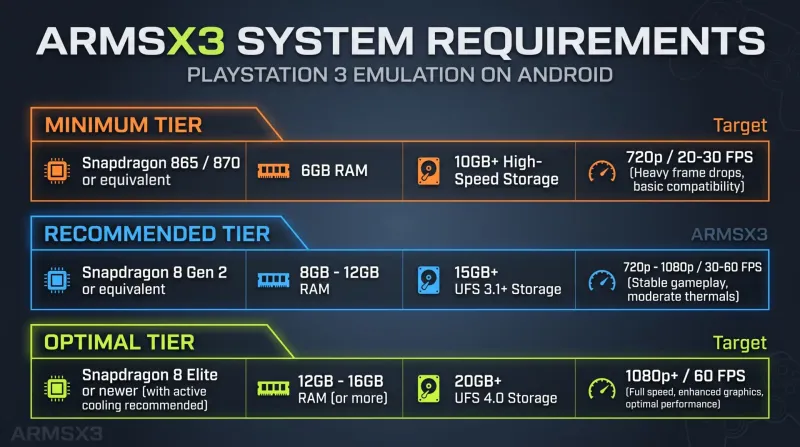
Even with streamlined installation, PlayStation 3 architecture remains demanding to recreate on mobile processors. Sony built the original console around the intricate Cell Broadband Engine, whose specialized processing elements present steep emulation challenges for mobile chipsets. The developers addressed these computational demands by outlining explicit hardware tiers within the Play Store application listing.
At the baseline level, running lightweight titles demands 64-bit Armv8.1 CPU architecture alongside 8GB of system RAM. The development team specifically designated Qualcomm Snapdragon 865 and Snapdragon 870 processors paired with Adreno 650 graphics as suitable starting points, while noting that Arm Mali-G57 graphics can handle rudimentary workloads.
Achieving practical performance across a broader library demands considerably more computational power. The recommended hardware tier specifies a Qualcomm Snapdragon 8 Gen 2 platform or better, an Adreno 740 graphics processor, and 12GB of system RAM. Project maintainers noted that while this hardware combination runs numerous playable releases, games that place massive computational strain on the central processor or the console Synergistic Processing Units will struggle to maintain playable speeds.
For the most demanding gaming scenarios, the store listing outlines optimal specifications consisting of a Qualcomm Snapdragon 8 Elite processor, an Adreno 830 graphics chip, at least 12GB of system RAM, and active cooling hardware. The listing emphasizes that budget and midrange devices, including Samsung Galaxy A and Motorola Moto G handsets, lack the processing capabilities required for PlayStation 3 emulation.
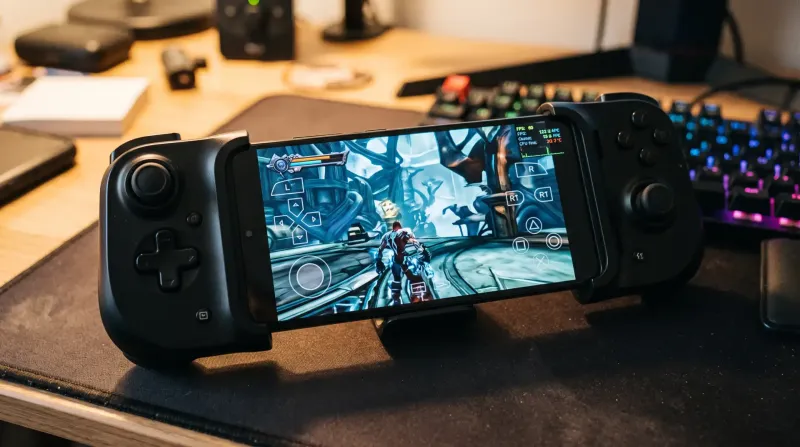
Hardware selection also carries software implications, particularly regarding graphics driver support. The development team explained that custom Turnip graphics drivers provide the most reliable rendering performance and graphical stability. Because Turnip drivers function exclusively on Qualcomm Snapdragon silicon, devices equipped with MediaTek Dimensity processors or Samsung Exynos platforms face elevated risks of visual glitches, rendering artifacts, and performance bottlenecks.
Storage efficiency also saw notable progress ahead of the storefront debut. A recent project update integrated support for CHD compressed disc images, delivering much smaller file sizes than conventional uncompressed disc images. This format optimization proves critical on mobile handsets, where full console games regularly exceed twenty gigabytes of local storage capacity, straining onboard flash memory.
The Google Play launch coincides with an aggressive development cycle that delivered several software updates over recent days. Recent revisions introduced targeted performance and stability enhancements for high profile console releases, benefiting acclaimed major titles like Metal Gear Solid V and Gran Turismo 5, alongside Demon's Souls, Gran Turismo 6, and entries across the Ratchet and Clank series. In addition to title specific tuning, the developers introduced an architectural update extending software compatibility to Android devices operating without Google Play Services, ensuring that Huawei phone owners can also run the software without platform conflicts or missing dependencies.

Comments
No comments yet — be the first.
Leave a comment