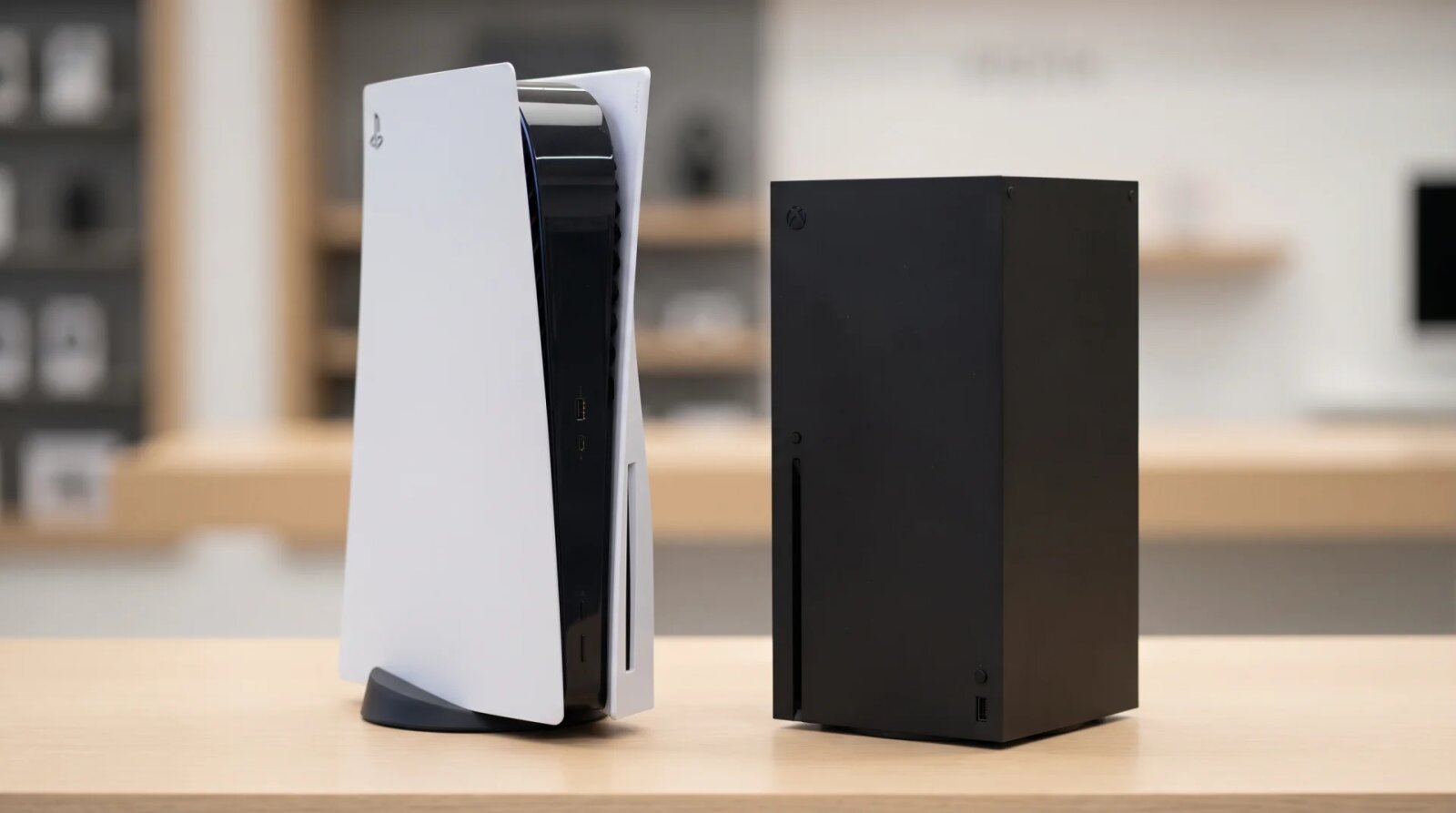
Circana retail tracking reveals Microsoft hardware volume sank 33 percent year to date while Sony dropped 25 percent, dragging domestic device sales to levels unseen in over a decade.
American consumers are pulling back sharply from dedicated gaming hardware, sending retail console sales tumbling across the United States after aggressive manufacturer price increases pushed modern systems to historic highs.
Industry tracking figures compiled by market research firm Circana show that Xbox console shipments through August dropped 33 percent year over year, sinking the brand to its lowest domestic volume since Microsoft entered the market nearly a quarter century ago. Sony PlayStation unit sales declined 25 percent over the same eight month span, recording the platform's weakest domestic performance since 2013, when shoppers paused hardware purchases ahead of the PlayStation 4 debut.
The contraction reflects a growing divide between escalating equipment costs and household budgets. Rising component prices, driven largely by intense competition for advanced semiconductors and memory modules used across the artificial intelligence sector, have forced hardware makers to repeatedly raise sticker prices rather than discount aging systems. Broader inflationary pressures have simultaneously squeezed discretionary entertainment spending nationwide.
According to Circana video game industry advisor Mat Piscatella, consumer price sensitivity has emerged as a fundamental barrier to retail momentum. Sharing data from Circana's retail tracking service, Piscatella observed that the domestic hardware business has not occupied such a precarious position since the industry crash of the early 1980s.
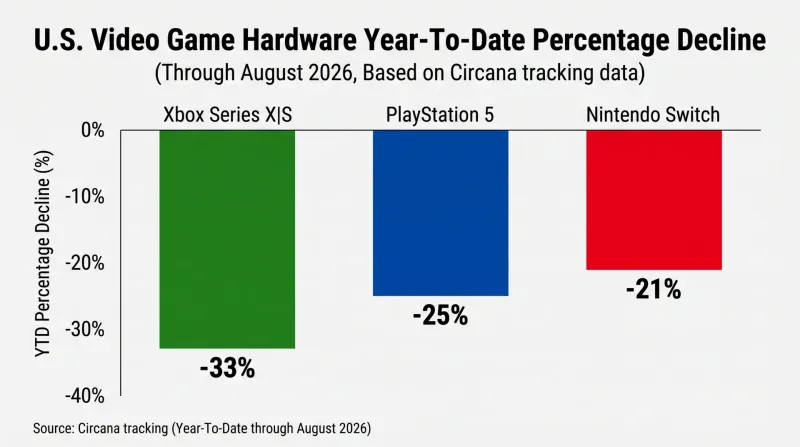
The downturn deepened during late summer trading. Circana data revealed that Xbox hardware volume fell 31 percent during August compared to the prior year, marking its slowest August pace since 2020. PlayStation hardware dropped 11 percent over the identical monthly window to reach its lowest August volume since 2013. Nintendo hardware also slipped, experiencing a 15 percent year over year decline in monthly unit volume.
The sustained drop marks a sharp reversal for systems that once broke sales records during the pandemic era. Traditional console product cycles usually bring manufacturing efficiencies and subsequent retail price cuts three to four years after launch. Instead, the current hardware generation has moved in the opposite direction.
Both Microsoft and Sony have enacted successive price increases across their product lines over the past two years, testing the upper limits of consumer willingness to pay.
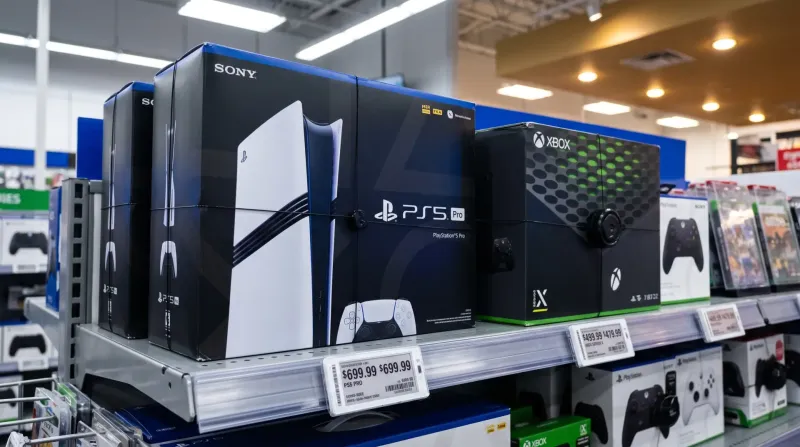
Microsoft has raised Xbox retail pricing three times over the past two years while trimming consumer options. The software giant lifted prices on 512GB configurations by $100 and added $150 to 1TB models, while discontinuing its 2TB model entirely.
Those adjustments pushed the entry level Xbox Series S to $499.99 for the 512GB version and $599.99 for the 1TB variant. The flagship Xbox Series X Digital Edition now retails at $749.99, while the version equipped with an optical disc drive sits at $799.99.
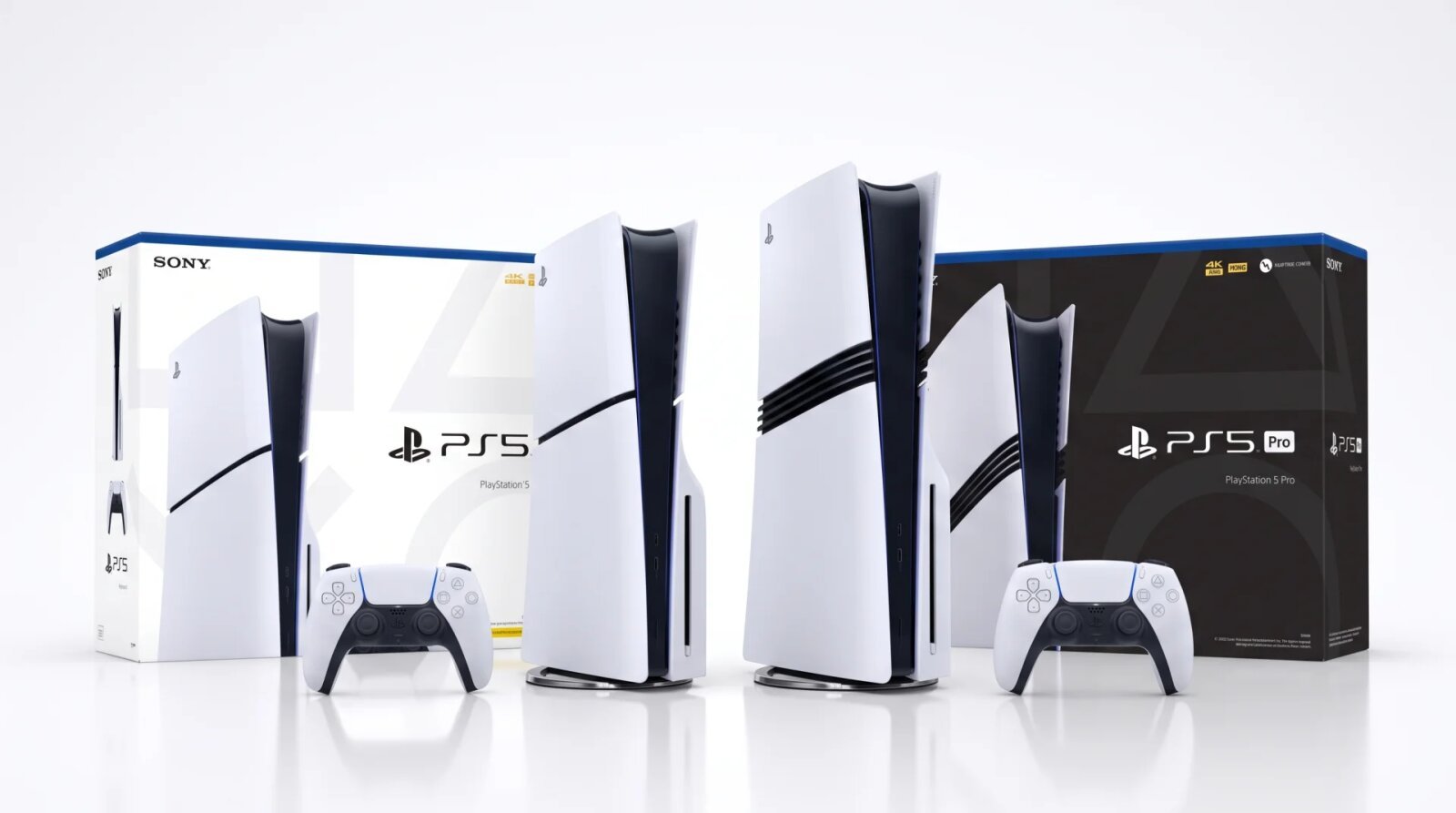
Sony has followed an equally aggressive pricing strategy, adding between $100 and $150 to various configurations across its PlayStation ecosystem. The disc-free PlayStation 5 Digital Edition now costs $599.99, while the standard model with a physical disc drive commands $649.99.
At the premium tier, Sony established a new industry benchmark by pricing the high end PlayStation 5 Pro at $899.99. Even peripheral devices and secondary inventory saw upward revisions. The PlayStation Portal streaming handheld climbed $50 above its original $199.99 release price to reach $249.99, while manufacturer refurbished PlayStation 5 Slim units jumped $100 to sell at $399.
Hardware availability bottlenecks have exacerbated sticker shock. Despite high retail pricing, initial shipments of the PlayStation 5 Pro have remained limited, pushing secondary market asking prices well into four figures. Specialty retailer GameStop has listed refurbished units at $1,399, roughly $500 above standard retail pricing. Units across major storefronts like Best Buy and Walmart have hovered around $1,499, while sealed online marketplace units trade near $1,299.
Skyrocketing ownership costs have prompted many families to postpone or cancel planned upgrades, prioritizing everyday essentials over recreational technology. With baseline equipment commanding luxury prices, publishers and retailers are depending heavily on fourth quarter releases to reinvigorate consumer interest.
The domestic market faces a critical test in November with the scheduled launch of Grand Theft Auto VI, alongside traditional holiday promotions. Industry executives hope the blockbuster release can overcome consumer hesitation, though analysts caution that high hardware costs could dampen the software rollout's overall economic lift.
Tom's Hardware October 11, 2026

Comments
No comments yet — be the first.
Leave a comment