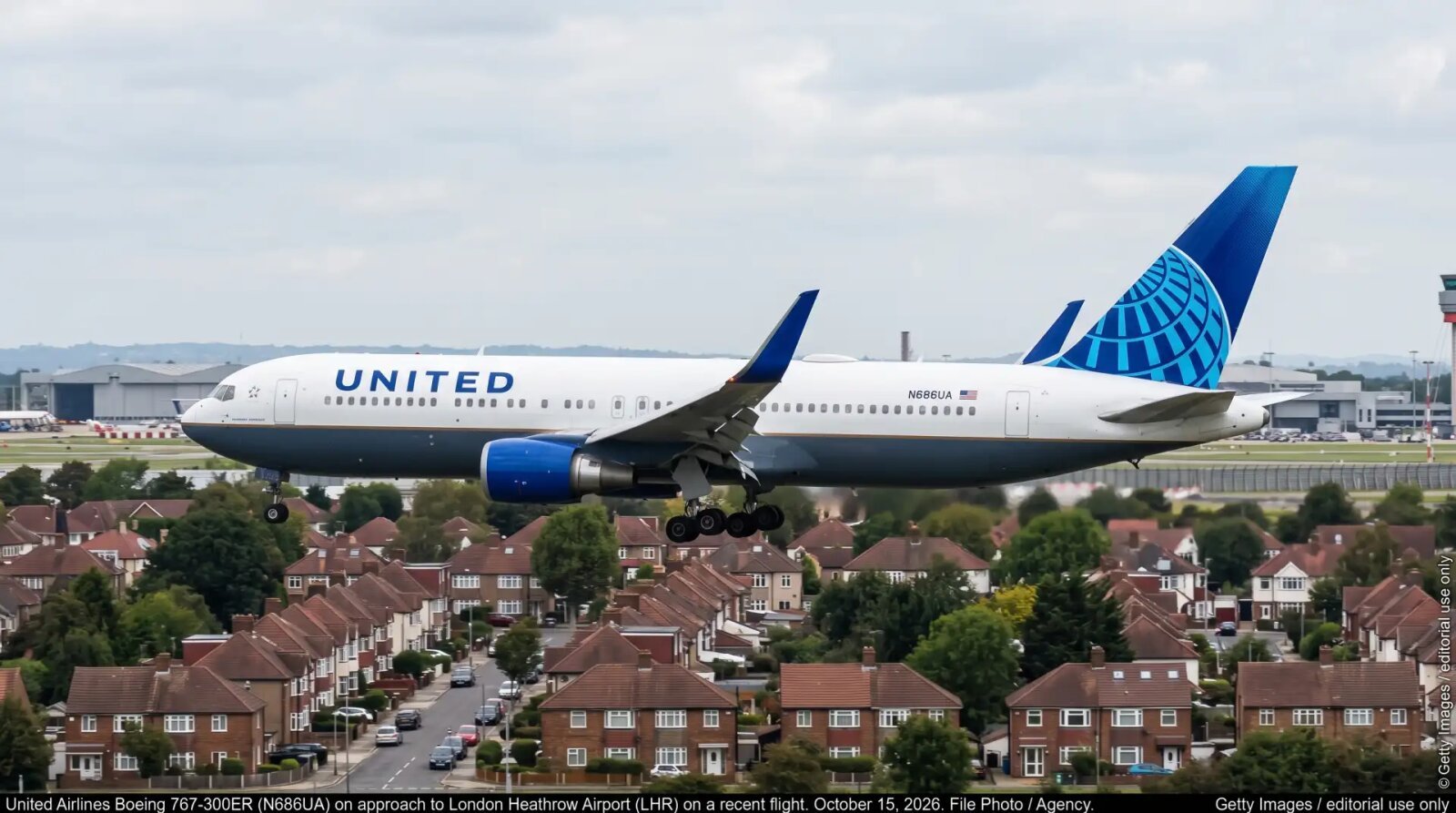
Pilots aboard the Newark-bound Boeing 767 transmitted a general emergency signal at 32,000 feet over Manchester before landing safely alongside waiting airport fire crews and canceling the transatlantic crossing.
LONDON - A transatlantic passenger jet bound for New Jersey aborted its journey over northern England on Thursday afternoon after flight deck crews detected an unidentified smell inside the aircraft. The United Airlines Flight UA941 emergency forced the Boeing 767-300ER to turn back to London Heathrow Airport, where emergency fire vehicles met the widebody plane upon landing before the carrier canceled the crossing.
The scheduled service to Newark Liberty International Airport departed Heathrow shortly after 4:00 p.m. local time, with flight-tracking logs recording liftoff at 4:33 p.m. Operated by a twenty-three-year-old Boeing 767-300ER registered as N686UA, certified airworthy by federal regulators in February 2003 and powered by twin Pratt and Whitney PW4060 turbofan engines, the aircraft climbed northward across the English Midlands before leveling off at an altitude of approximately 32,000 feet near Manchester.
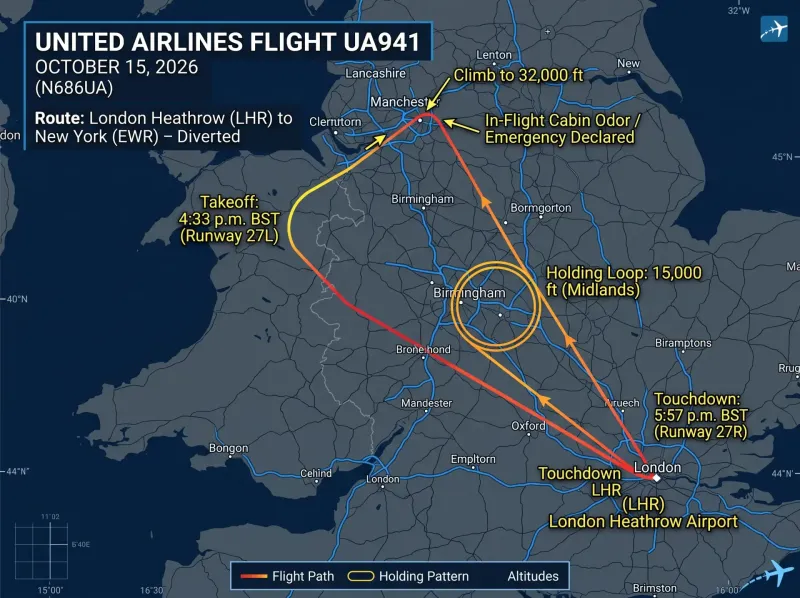
Shortly before 5:00 p.m., the pilots transmitted transponder code 7700, the universal aviation signal alerting air traffic controllers to a general onboard emergency, and requested clearance to return to London. Tracking data from AirNav Radar and FlightAware showed the airliner continuing briefly toward the Lancashire coast before executing a southward turn and descending to 15,000 feet.
According to aviation monitor AIRLIVE, the flight crew initially weighed jettisoning approximately 20 tons of aviation fuel to reduce the heavy widebody landing weight, as aircraft fueled for seven-hour Atlantic crossings typically exceed normal touchdown limits early in flight. The pilots ultimately abandoned the fuel dump after circling briefly over the Midlands and proceeded directly toward London. The jet touched down safely on Heathrow Runway 27R just before 6:00 p.m., roughly eighty-four minutes after takeoff, where airport fire crews escorted the plane to a remote southern parking stand while controllers temporarily shifted incoming traffic to a parallel runway for surface inspections.
Airline officials confirmed that everyone aboard disembarked safely through standard procedures once the aircraft reached its parking stand at 6:40 p.m., though the total passenger count and the specific mechanical origin of the smell were not disclosed. Unverified online speculation regarding a burning odor was not corroborated by the airline, and no medical interventions were reported.
United flight 941 safely returned to London to address an odor in the cabin and passengers deplaned normally, the Chicago-based carrier said in a statement provided to travel publication TheTravel, adding that the flight was subsequently canceled while staff worked to rebook customers toward their final destinations. Affected travelers also received hotel vouchers for overnight lodging near the airport.
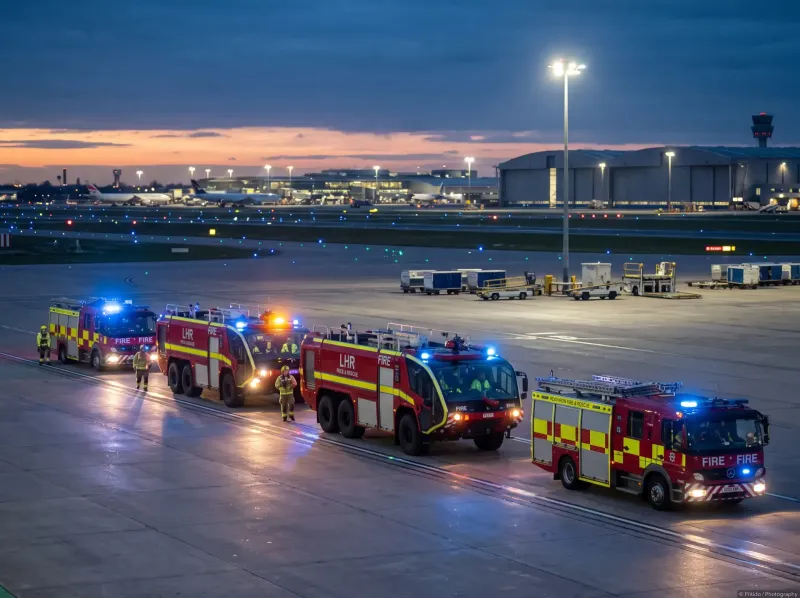
The diversion drew immediate notice from ground observers and aviation enthusiasts on social media platform X. One resident in the Midlands noted hearing the widebody engines roaring overhead at 15,000 feet during its circular descent pattern, while airport witnesses remarked on the fleet of emergency vehicles trailing the plane with flashing blue lights after dark.
Because the disrupted journey originated at a British airport, stranded travelers fall under United Kingdom Civil Aviation Authority consumer protection mandates. Under those regulations, airlines cancelling long-haul departures must provide complimentary meals, refreshments, communication access, and overnight hotel accommodations. Passengers reaching their final destination more than three hours behind schedule may also qualify for statutory cash compensation unless the carrier demonstrates the disruption resulted from extraordinary circumstances such as severe weather, security threats, or hidden manufacturing defects.
Thursday turnaround marked the second transatlantic interruption involving an aging United Boeing 767 within four days. On October 12, United Flight UA946 from Washington Dulles to Amsterdam diverted to St. John in Newfoundland after crews reported an engine problem aboard a thirty-five-year-old Boeing 767-300. Earlier this month on October 4, a Newark-bound United Boeing 757 similarly returned to Dublin after a potent cabin fuel smell caused headaches among passengers and crew. Flight-tracking schedules subsequently listed N686UA returning to service for a scheduled Heathrow departure on Friday afternoon.
AeroCorner / FlightAware & FAA Registry Data


Comments
No comments yet — be the first.
Leave a comment