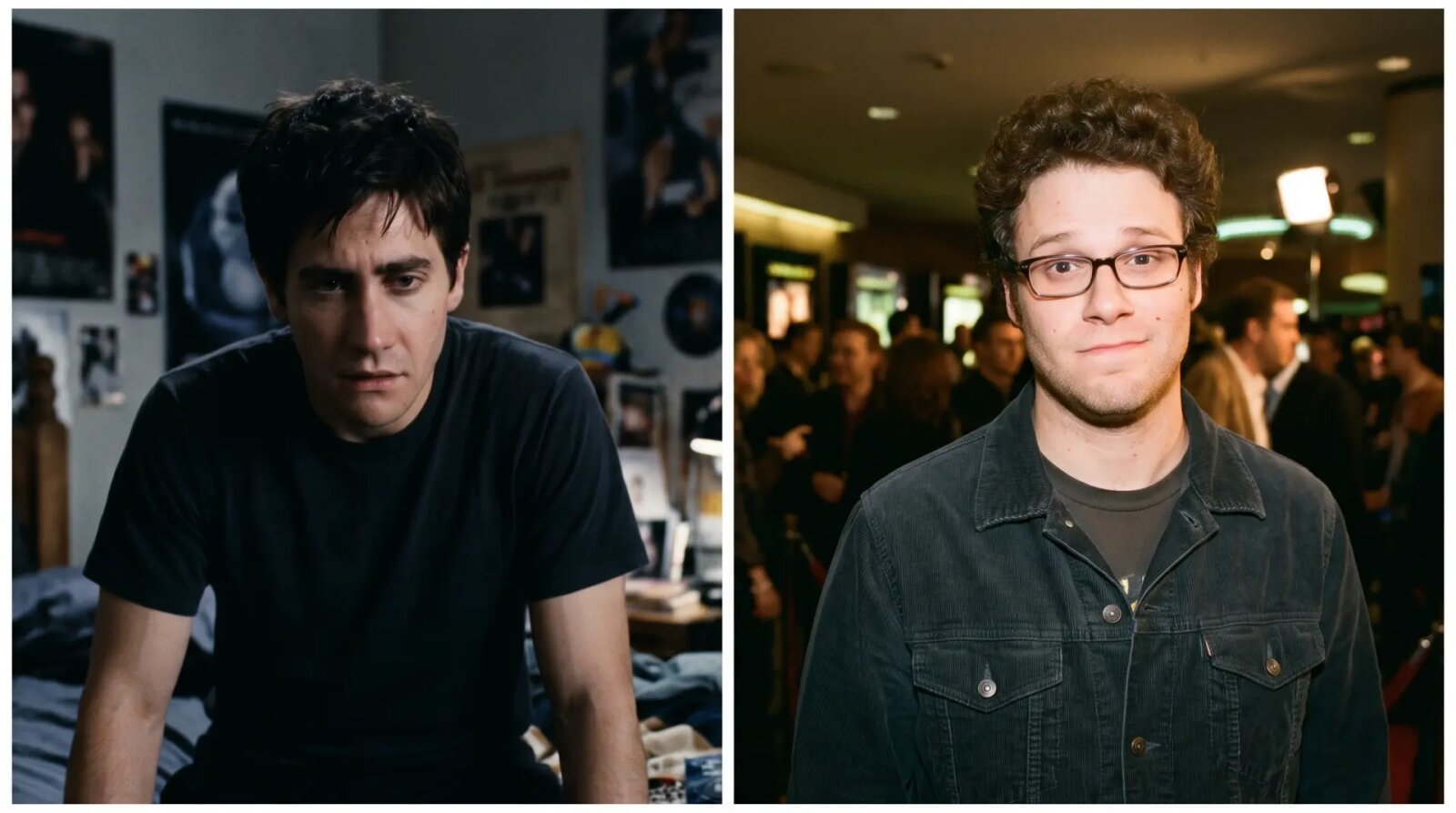
Looking back for the cult classic’s 25th anniversary, the filmmaker and comedy star recalled realizing for the first time how deeply a performer could probe an unsettling psychological script.
Seth Rogen admitted he was thoroughly uncertain about how audiences would receive Jake Gyllenhaal's central performance while filming the 2001 cult classic Donnie Darko, recalling his bewilderment over his co-star's brooding choices.
Reflecting on the psychological thriller for an extensive retrospective published by The New York Times to mark the movie's 25th anniversary, Rogen noted that Gyllenhaal completely bypassed traditional teenage charm in favor of a troubled, vulnerable realism that was unfamiliar to him at the time.
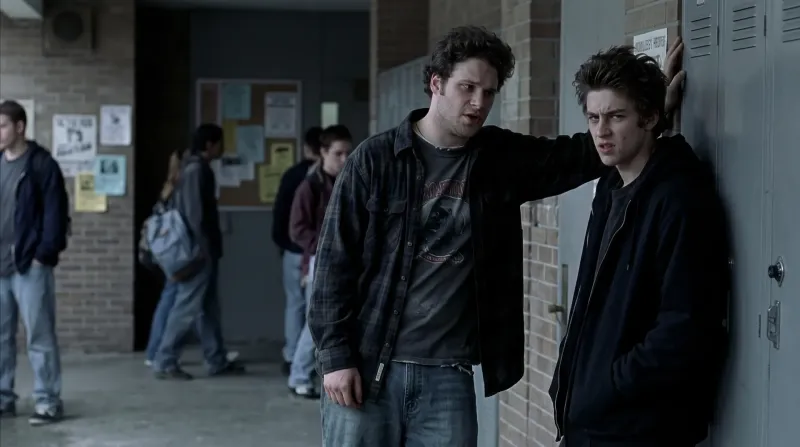
Rogen, who made his feature film debut in the independent production after appearing in Judd Apatow's television series Freaks and Geeks, played high school bully Ricky Danforth alongside actor Alex Greenwald's character Seth Devlin. At the time of filming in 2000, Rogen was still a teenager and had little formal exposure to rigorous dramatic methods.
Watching Gyllenhaal embody Donald Darko, an emotionally alienated high school student plagued by sleepwalking episodes and apocalyptic visions, left Rogen wondering whether moviegoers would connect with such a disquieting figure.
“I remember seeing [Gyllenhaal] on set and being like, 'I don't know how this is going to land,'” Rogen said in the retrospective. “He wasn't playing this charming version of it.”
Rather than offering the easy charisma typical of youthful studio leads of that era, Gyllenhaal leaned into Donnie's disorientation, volatile emotional outbursts, and deep isolation. For Rogen, observing that psychological dedication proved to be an unexpected artistic revelation that broadened his personal understanding of dramatic craft.
“I remembered thinking he put a level of thought into this that I didn't even realize, as an actor, was on the table,” Rogen added.
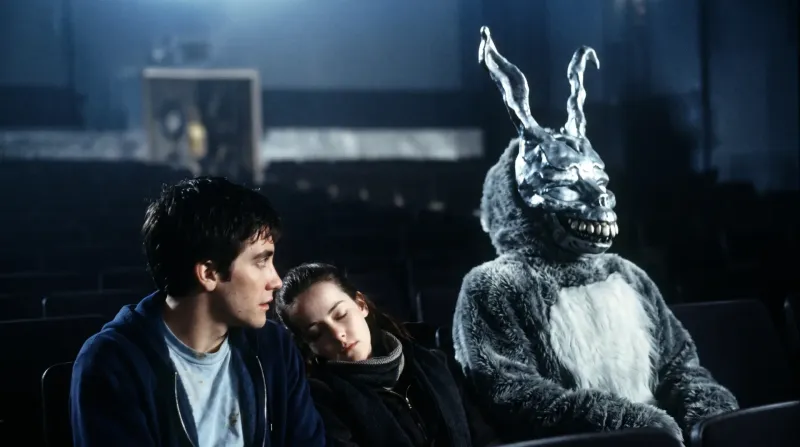
Written and directed by Richard Kelly in his feature directorial debut, Donnie Darko was mounted on an estimated budget of $4.5 million. In addition to Gyllenhaal and Rogen, the ensemble included Jena Malone as Gretchen Ross, Drew Barrymore as English teacher Karen Pomeroy, Mary McDonnell as Rose Darko, Katharine Ross as psychotherapist Dr. Lillian Thurman, Patrick Swayze as motivational speaker Jim Cunningham, and Noah Wyle as science teacher Kenneth Monnitoff. Barrymore also served as an executive producer through her Flower Films banner, providing crucial industry leverage that helped Kelly secure financing and retain artistic control.
Set in the suburban town of Middlesex, Virginia, in the autumn of 1988, the narrative begins when a jet engine crashes into Donnie's bedroom. Donnie escapes death because he was sleepwalking outside, lured away by Frank, a mysterious six-foot figure dressed in a grotesque rabbit mask. Frank informs the troubled teenager that the world will end in just over twenty-eight days, triggering a surreal sequence of events that intersects time travel, schizophrenia, suburban hypocrisy, and existential dread.
When the movie premiered at the Sundance Film Festival in January 2001, distributors were initially mystified by its dense internal logic and genre-blurring tone. The picture eventually secured a limited domestic theatrical release in late October 2001 through Newmarket Films. Arriving in cinemas roughly six weeks after the September 11 terrorist attacks, the film struggled severely to find commercial traction, as audiences avoided grim stories involving aviation disasters. During its initial domestic run, it grossed slightly more than $500,000.
Despite its quiet theatrical arrival, Donnie Darko gradually transformed into a worldwide cultural touchstone through passionate word of mouth, overseas theatrical momentum, and lucrative home video distribution. British audiences embraced Kelly's eerie vision during a theatrical release the following year, while college dormitories and repertory movie theaters in North America turned midnight screenings into communal rituals.
Critics and audiences who initially struggled with the film eventually celebrated Gyllenhaal's nuanced performance as the anchor holding its intricate science fiction mythology together. His depiction of teenage alienation captured a specific adolescent grief that resonated with a generation of filmgoers. The breakout role propelled Gyllenhaal into major Hollywood productions, leading to acclaimed performances in Brokeback Mountain, Zodiac, and Nightcrawler.
For Rogen, who subsequently developed an accomplished career as a screenwriter, producer, and comedic performer, looking back twenty-five years later provides a full-circle perspective. The performance that once appeared perplexing on a low-budget independent set ultimately stood as proof of Gyllenhaal's instinctive creative daring, turning an idiosyncratic indie experiment into a cinematic milestone.
Source:
The New York Times October 26, 2026
Entertainment Weekly October 27, 2026
TheWrap October 27, 2026

Comments
No comments yet — be the first.
Leave a comment